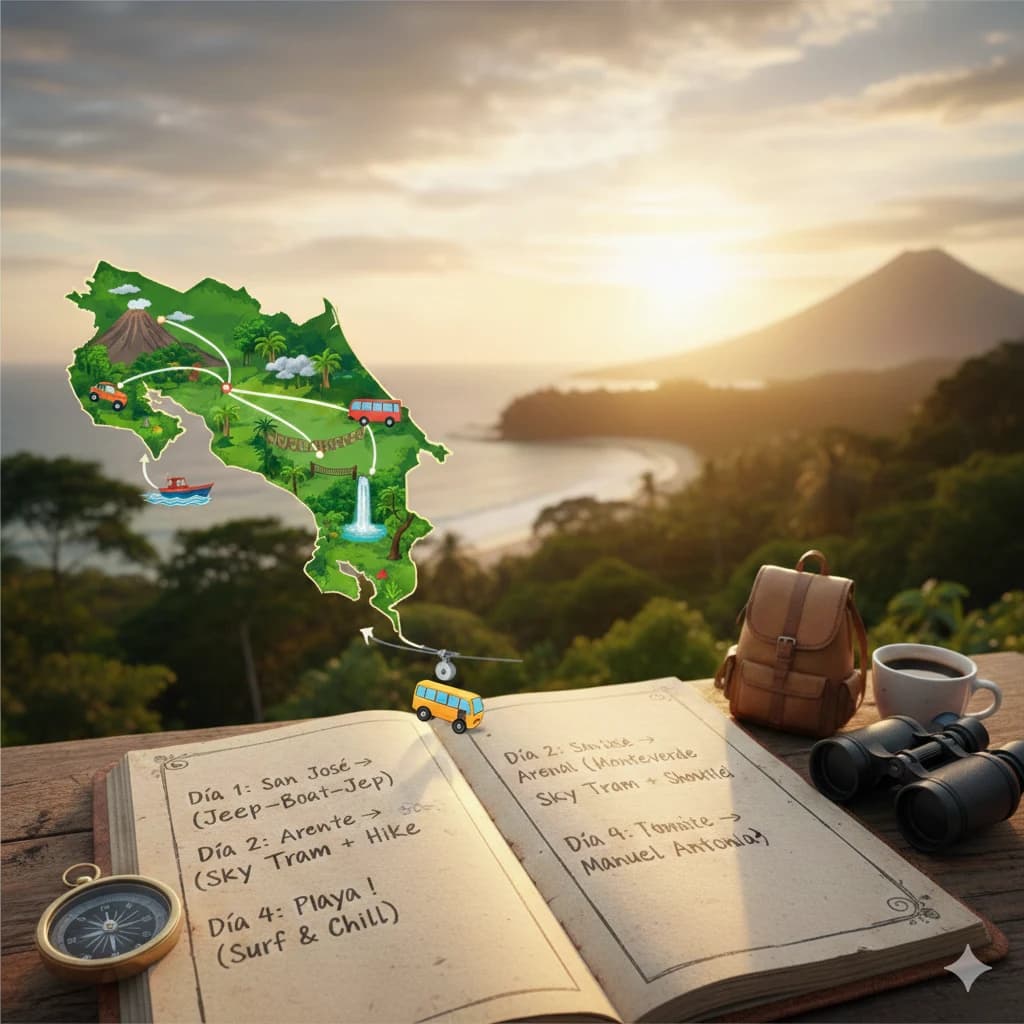

While the rest of Costa Rica is famous for rain and jungle, Guanacaste offers something different—endless sunshine, golden beaches, and a slower pace of life. Discover why this province is becoming Costa Rica's most sought-after destination.
Costa Rica is famous for its rain. The jungle, the cloud forests, the rivers—all fed by an endless cycle of tropical showers. But there's a place where the sun rules. Where the landscape turns golden instead of green. Where you can plan a beach day and actually trust the weather. Welcome to Guanacaste, Costa Rica's Pacific paradise.
Why Guanacaste Is Different
Guanacaste is Costa Rica's driest province. While the Caribbean coast and central highlands receive rain almost daily, Guanacaste enjoys a distinct dry season from December to April with virtually no precipitation. Even during the green season (May-November), mornings are typically sunny, with rain arriving only in late afternoon.
This unique climate creates a landscape unlike anywhere else in Costa Rica. Dry tropical forests with twisted trees. Savannas that turn golden in summer. And beaches—dozens of them—each with its own personality, framed by dramatic headlands and warm Pacific waters.
The Beaches: A Guide to Guanacaste's Coast
Guanacaste's coastline stretches over 160 kilometers, dotted with beaches ranging from developed resort towns to hidden coves accessible only by boat. Here's what makes each area special:
Tamarindo
The most developed beach town in Guanacaste. Tamarindo offers excellent surf breaks for beginners and intermediates, a vibrant restaurant scene, and reliable nightlife. It's the most "international" feeling town on the coast—you'll hear as much English as Spanish. Best for: First-time visitors, surfers, those who want amenities and variety.
Playa Flamingo
White sand (rare in Costa Rica), calm waters, and an upscale vibe. Flamingo is home to one of the few full-service marinas on the Pacific coast, making it a hub for sportfishing and sailing. The beach itself is quieter than Tamarindo with a more residential feel. Best for: Families, boating enthusiasts, those seeking relaxation over nightlife.
Playa Conchal
Named for the millions of crushed shells that make up its shore, Conchal is often called Costa Rica's most beautiful beach. The water is impossibly turquoise, perfect for snorkeling. Access is either through the Westin resort or via a 20-minute walk from neighboring Brasilito. Best for: Day trips, snorkeling, beach lovers who prioritize natural beauty.
Papagayo Peninsula
Costa Rica's most exclusive address. The Papagayo Peninsula hosts Four Seasons, Andaz, and other luxury properties along with secluded beaches and private coves. Even if you're not staying at a resort, several beaches remain public and accessible. Best for: Luxury travelers, special occasions, those seeking privacy and premium service.
Playas del Coco
A working fishing village turned beach town. Coco maintains more local flavor than its neighbors, with authentic sodas, reasonable prices, and a large expat community. The diving here is excellent, with access to the Catalina Islands and Bat Islands. Best for: Budget travelers, divers, those seeking authentic Costa Rican culture.
Nosara & Playa Guiones
The wellness capital of Costa Rica. Nosara is where yoga retreats, organic cafes, and surf culture converge. Playa Guiones offers consistent waves year-round and strict development regulations keep the beach pristine. Best for: Yoga practitioners, intermediate surfers, health-conscious travelers.
Samara
The laid-back alternative. Samara feels like what Tamarindo was 20 years ago—small, friendly, unpretentious. A reef protects the bay, creating calm swimming conditions even for small children. Best for: Families with young kids, budget travelers, those avoiding crowds.
Beyond the Beach
Guanacaste offers more than sand and surf:
- Rincón de la Vieja National Park: Active volcano with mud baths, hot springs, and waterfalls. A must-do day trip from any Guanacaste beach.
- Santa Rosa National Park: Historic site of Costa Rica's most important battle and home to pristine dry forest teeming with wildlife.
- Palo Verde National Park: Wetland sanctuary where crocodiles, monkeys, and hundreds of bird species gather along the Tempisque River.
- Liberia: The provincial capital, known as the "White City" for its colonial architecture. Worth a stop for authentic Guanacastecan culture and cuisine.
- Sportfishing: Guanacaste is one of the world's top destinations for sailfish, marlin, and roosterfish. Peak season runs December through April.
Getting to Guanacaste
Guanacaste has its own international airport: Daniel Oduber Quirós (LIR) in Liberia. Flying directly into Liberia puts you 30-60 minutes from most Guanacaste beaches, compared to 4-5 hours from San José.
- LIR to Tamarindo: 1 hour 15 minutes
- LIR to Papagayo: 30 minutes
- LIR to Playas del Coco: 35 minutes
- LIR to Nosara: 2 hours
- LIR to Samara: 2 hours 15 minutes
- SJO to Tamarindo: 4 hours 30 minutes
- SJO to Papagayo: 4 hours
The roads in Guanacaste are generally good—better than many other parts of Costa Rica. However, some beach towns require navigating unpaved sections, and distances can be deceiving on the map. Having a driver who knows the region means arriving relaxed instead of stressed.
Best Time to Visit
Guanacaste's climate makes it a year-round destination, but each season has its character:
- December - April: Dry season. Guaranteed sunshine, minimal rain, peak prices. Book accommodations and transfers well in advance.
- May - June: Transition months. Occasional afternoon showers, but mornings remain sunny. Fewer crowds, lower prices, landscapes turning green.
- July - August: Mini-summer (Veranillo de San Juan). Brief dry spell mid-green season. Good balance of weather and value.
- September - November: Wettest months. Best deals, emptiest beaches, lushest scenery. Rain typically falls late afternoon—mornings are often beautiful.
The Guanacaste Lifestyle
Guanacastecans have their own distinct identity within Costa Rica. This was cattle country long before it became beach country. The sabanero (cowboy) tradition runs deep, celebrated every July 25th on Guanacaste Day with rodeos, folk music, and traditional foods.
The pace here is slower. Lunch might take two hours. Shops close midday when the heat peaks. Sunsets are a community event—people gather on beaches to watch the sky turn orange and pink over the Pacific.
In Guanacaste, we say 'la vida es un ratito'—life is just a little while. So why rush through it? — Local saying
Planning Your Guanacaste Trip
Most visitors to Guanacaste either fly into Liberia and stay coastal, or combine beach time with other Costa Rica highlights. A popular itinerary includes a few days in La Fortuna (Arenal Volcano, hot springs, adventure activities) followed by beach relaxation in Guanacaste—or vice versa.
The transfer from La Fortuna to Guanacaste beaches takes 3-4 hours depending on destination, passing through some of Costa Rica's most scenic countryside. It's a journey worth doing by road rather than flying—you'll see the landscape transform from volcanic jungle to tropical savanna.
Whatever brings you to Guanacaste—the beaches, the sun, the surf, the slower pace—you'll understand why so many visitors extend their stay. And why so many eventually come back for good.
Ready to discover Costa Rica's golden coast?
Book Your Guanacaste Transfer%2520(1).webp&w=2048&q=75&dpl=dpl_rp5ej9pmmoA2yX3Q7rmp5SGsSQmY)